Global Social Order Collapse
Leave the World BehindGlobal Social Order Collapse is the widening breakdown of the systems that make ordinary life seem stable, from electricity and communications to water, transport, and public authority. The story begins with an unexplained blackout on the East Coast of the United States, but its consequences soon exceed any single outage or identifiable attack. As people receive less information and essential services fail, the boundary between a local emergency and a global crisis disappears. The collapse is shown not as uniform, instantaneous chaos, but as a mixture of uncertainty, improvised shelter, mutual aid, and losses that many people cannot even learn about.
From Blackout to Uncertainty
The crisis first enters the Washingtons' Long Island house as incomplete information. An alert on Amanda's phone reports a major blackout on the East Coast of the United States, but the application will not open. The brief notification confirms that something has happened without explaining its scale, cause, or likely duration. When the television is switched on, the Emergency Broadcast System appears on a blue screen and gives only repeated beeps and a quiet hiss. A channel meant to provide public instructions becomes another sign that no useful account is available.
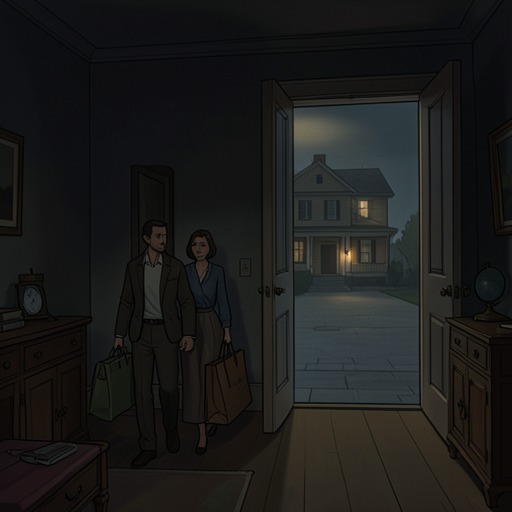
The blackout also makes familiar geography feel newly uncertain. G. H. and Ruth have driven from Manhattan to the house after seeing the lights go out. Amanda struggles to understand why they traveled so far, while G. H. says the roads were familiar and that he had scarcely thought about the decision. Their choice to stay is practical, but neither they nor their hosts can explain what is happening. Later, Danny describes checking Apple News, finding no service or cable at home, and driving into town for supplies. The store is quiet rather than crowded; people appear to be carrying on with an ordinary day because they do not know what has changed. His account makes absence of information itself consequential: residents cannot reliably judge whether to leave, stock up, or remain where they are.
Interdependent Systems Begin to Fail
The household's remaining utilities offer no assurance of safety. G. H. explains that the water supply depends on an electric pump filling a reservoir, so the loss of power can also mean the loss of running water. He marvels that the house still has electricity, although he knows the house itself cannot account for the grid continuing to function. The exchange exposes a dependency that is usually hidden: a tap seems like an independent convenience until the equipment behind it stops working.
A later sequence of three noises makes the limits of local explanations still clearer. The sounds recur, and a window over the sink and a pendant light crack, yet the electricity remains on. The people in the house cannot identify the sounds or know what they signify. The narration identifies them as American planes in American airspace, heading toward a future whose actions and reactions extend beyond the household's knowledge. That distinction matters: the reader is given a wider view of events than the people listening to them, but even that wider view does not provide a simple, fully traceable cause for the unfolding breakdown.
Infrastructure failures appear at different scales and with different consequences. In New York City, loss of power disrupts the electric pumps that supply water to upper-floor apartments, putting residents at risk of dehydration. Elsewhere, the failure of backup generators disables machines that support life in Miami, Atlanta, Charlotte, and Annapolis. The disruption of air-traffic control is associated with the loss of a Delta flight traveling between Dallas and Minneapolis. These are not merely inconveniences added to a blackout: each failure reaches people through systems on which survival and movement already depend.
The Crisis Becomes Global
The narrative widens beyond the household to show a world whose inhabitants experience the emergency unevenly. Some people attempt to leave, hoping to reach safety by car; others continue to jobs that will soon seem useless, or do not yet know that anything is wrong. Governors declare states of emergency but cannot work out how to inform the public. In towns in New Mexico and Idaho, there is as yet no visible local disaster, but people cannot seem to communicate with the satellites overhead. Distance does not guarantee independence from the crisis, and political borders offer little protection from failures that cross them.
The accounts of loss are similarly dispersed. Floodwaters rise into homes in the South after levees give way. A hospital in Philadelphia loses power after a baby is born, and the newborns in the neonatal intensive care unit die within hours. In Brooklyn, spoiled food, accumulated garbage, and commuters trapped during the disruption become part of a mounting public emergency. The narrative also describes a plane lost during the breakdown of air-traffic control and other deaths caused by emergency services being unable to reach people. These outcomes are presented as consequences of systems failing together, not as a single spectacle that everyone can witness or interpret.
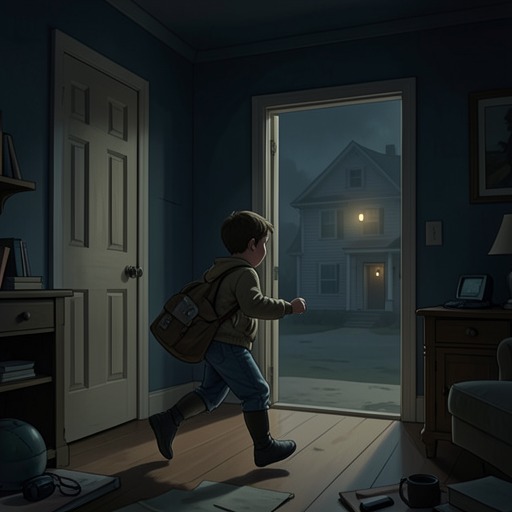
The range of reactions resists a simple picture of universal panic. Some people lock their doors and play board games with their families. In Harlem, workers at a Salvadoran restaurant grill food outside and give it away for free. Some people gather in churches, while others seek out neighbors they imagine may be better prepared. A mother in St. Charles, Maryland, kills her two daughters, an appalling act the narration sets beside the ordinary family game Chutes and Ladders. The contrast shows how catastrophic fear can deform private judgment, without suggesting that every household responds in the same way. Meanwhile, the quiet shop Danny visits and his decision to stay home demonstrate a more common uncertainty: people act on fragments of evidence because reliable guidance is missing.
Recognition, Denial, and the Changed World
At the house, the repeated sounds eventually crack windows, but the lights remain on. The group has no confirmed explanation, and speculation about bombs or missiles cannot settle into knowledge. Earlier, Ruth had imagined a missile alert, recalling the false alarm in Hawaii and wondering how people would spend the final thirty-two minutes before an expected strike. Her fear is not proof that a missile is coming; it reveals how little information there is to distinguish a real threat from a remembered near-disaster. Amanda, for her part, cannot make sense of Ruth's speculation. Their differing reactions show how the same information vacuum invites both anxious scenarios and disbelief.
As Rose walks through the woods, the account places the crisis within a longer environmental disturbance. The trees are described as registering distant seismic reverberations; coastal flooding and saltwater damage point toward changes that unfold over years as well as sudden shocks. Rose does not know the full extent of what is happening, but the narration presents the sickness of land, air, and water as continuous with the failure of human systems. The implication is not that a single, clearly identified cause explains every event. Rather, the blackout, the unexplained noises, environmental damage, and global breakdown gather into a change larger than the people around Rose can name.
The household's small routines continue even as their meaning shifts. The pool filtration system begins its scheduled cycle at 10:00 a.m., and its ordinary whirring briefly supplies a measure of time. But a surviving appliance is not evidence that the surrounding world is safe or intact. In the same way, people still work, travel, and make plans in places where the emergency has not yet become visible. The story's account of Global Social Order Collapse therefore turns on a widening gap between the appearance of normality and the systems supporting it: familiar routines persist for a while, while communication, infrastructure, and confidence in collective order are already failing.